
 The
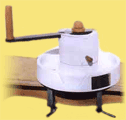
The SAMAP Hand Grain Mill and Flaker
is a simple, robust and practical hand grain mill which produces the finest of flours, including all the gluten free flours. It is suitable for any dry and non-oily grain — from the smallest like millet to the largest like maize or beans.Flour produced by the SAMAP Hand Grain Mill is suitable for breadmakers. On a different setting, it can be used to make oat flakes.
It is supplied as a kit and the assembly is straight forward.
Golden Fields has created an instructional video on how the SAMAP Hand Mill and Flaker is put together, and how to use it:
 Click for 6 minute instructional video Click for 6 minute instructional video
|
Price(s) listed on this page are valid only for payments by cheque or direct credit. Credit card payments will incur an additional 3.75% fee — this is the fee credit card companies charge us for credit card payments over the Internet or telephone.
Note: A freight surcharge will apply to New Zealand Rural Delivery (RD) customers.
• Click to show additional information …
• More on Mills …
Specifications:
Base diameter: 28cm
Height: 35cm
Weight: 8.75kg
Guarantee: 5 years
Output: variable: 30 to 80g/minute
(about 60g/minute for fine flour for bread or 4 minutes per cup)
(about 1 minute per half cup (1 serving) of oat flakes)
Note that this output depends on:
Base diameter: 28cm
Height: 35cm
Weight: 8.75kg
Guarantee: 5 years
Output: variable: 30 to 80g/minute
(about 60g/minute for fine flour for bread or 4 minutes per cup)
(about 1 minute per half cup (1 serving) of oat flakes)
Note that this output depends on:
- the fineness setting (gap between stones)
- the type of cereal grain (buckwheat is soft, wheat is tough)
- the adjustment of the feed into the milling chamber
- the speed of rotation (this depends on you, dear reader!)
- the moisture content of the grain. Less energy is required for dry grain (stored in a dry place or kept dry) than for grain with higher humidity content





